
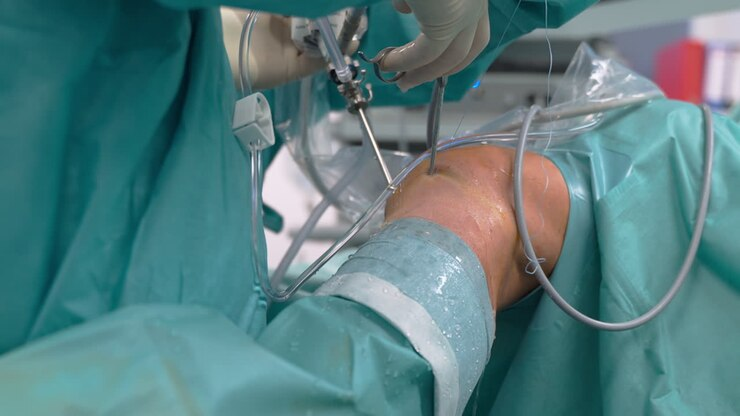
What is Knee Arthroscopy?
Knee arthroscopy is a minimally invasive knee surgery. Doctors use a small camera, called an arthroscope, to look inside your knee. Because the cuts are small, recovery is often faster than with open surgery. Many people choose knee arthroscopy to treat pain or injuries. In fact, this procedure helps doctors see and fix problems inside the knee without making large cuts.
Common Reasons for Knee Arthroscopy
Doctors may suggest knee arthroscopy for several reasons. For example, it can help diagnose or treat:
Sometimes, knee arthroscopy is also used to check for unexplained knee problems. Because it is less invasive, many people recover quickly.
How the Procedure is Performed
First, your doctor will give you anesthesia, so you do not feel pain. Next, small cuts are made around your knee. Through one cut, the doctor inserts the arthroscope. This tiny camera sends pictures to a screen. Then, special tools are used through other small cuts to fix or remove damaged tissue. Most knee arthroscopies take less than an hour. Afterward, you will rest in a recovery area for a short time. Because the cuts are small, you may go home the same day.
Recovery Process and Timeline
After knee arthroscopy, recovery is usually quicker than with open surgery. However, you will still need time to heal. Here is what to expect after knee arthroscopy:
Always follow your doctor’s instructions for the best knee arthroscopy recovery.
Benefits and Risks
Knee arthroscopy offers many benefits. For instance, it uses smaller cuts, so there is less pain and scarring. Recovery is often faster, and you may avoid a hospital stay. However, like any surgery, there are risks. These may include:
Although problems are rare, it is important to know both the benefits and risks. According to the CDC and orthopedic experts, most people recover well after knee arthroscopy.
Tips for a Smooth Recovery
To help your knee heal after minimally invasive knee surgery, try these tips:
Because everyone heals differently, always talk to your doctor if you have concerns.
Prevention and When to See a Doctor
While not all knee injuries can be prevented, you can lower your risk by staying active and keeping your muscles strong. For example, warm up before exercise and wear proper shoes. If you have knee pain that does not go away, see a doctor. Early treatment can help prevent further damage. If you notice swelling, redness, or severe pain after knee arthroscopy, contact your doctor right away.
In summary, knee arthroscopy is a safe and effective way to treat many knee problems. Because it is minimally invasive, recovery is often quick. However, always follow your doctor’s advice for the best results. Consult an orthopedic specialist at Shraddha Hospital to discuss if knee arthroscopy is right for you.